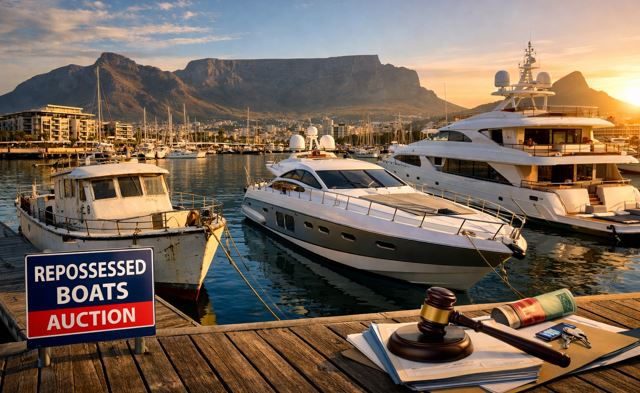
Owning a boat or luxury yacht is a dream for many South Africans but new vessel prices often place that dream out of reach. Repossessed boats and yachts provide an alternative path by offering significantly lower purchase prices through bank and court mandated sales. Understanding how this market works locally is essential before committing any money.
Repossessed vessels are sold to recover outstanding debt rather than to maximise profit. This creates opportunities for informed buyers who are prepared to do proper checks and budgeting.
Whether you’re in Cape Town, Durban or along the Garden Route, understanding how repossessed boats and luxury yachts are sold and how to navigate the risks and opportunities is essential.
What Repossessed Means in the South African Marine Market
A boat or yacht becomes repossessed when the owner fails to meet finance repayments and the lender takes legal ownership of the asset.
In South Africa this is most commonly done by banks finance houses or through sheriff of the court processes. Once repossessed the vessel is offered for sale usually through public auction.
These sales are conducted under strict legal procedures and are generally sold voetstoots meaning as is. So buyers must accept the condition of the vessel at the time of sale with limited recourse afterward.
Where Repossessed Boats and Yachts Are Sold Locally
Repossessed boats and yachts in South Africa are not as common as repossessed cars but they do come onto the market regularly.
Major auction houses occasionally list marine assets alongside vehicles and other movable property. Sheriff auctions and liquidations also include boats especially in coastal provinces.
Online auction platforms have made access easier for buyers nationwide. It is critical to verify that any platform is legitimate and officially authorised to sell repossessed assets.
Unlike cars, repossessed yachts and boats are less common — but they do appear at certain auctions and sales:
- Bank and finance auctions: Some banks include boats and marine craft alongside vehicles and recreational assets.
- Public auction houses: Large auctioneers sometimes offer repossessed boats, caravans or trailers alongside other goods.
- Sheriff and liquidator auctions: SA Sheriff and other platforms list diverse repossessed and seized assets nationwide.
- Online platforms: Some listings may filter maritime assets, though legitimacy must be verified. Always prioritise reputable auction houses.
Quick Checklist: Where to Look
- Auction calendars from major South African auctioneers
- Direct lists from banks or financial institutions
- Official sheriff or liquidations platforms
- Marine-focused auction events and expos
Cost Comparison Table
Here is a simple cost comparison table showing typical price ranges you might expect for repossessed boats vs private boats for sale in South Africa.
Note that pricing data for repossessed boats is limited locally but global repossessed sale trends suggest savings of roughly 20 – 40 % below typical private sale prices when sold at auction. This is a widely cited industry estimate for repossessed marine vessels.
| Category | Typical Repossessed Price (Estimated) | Typical Private Sale Price (South Africa) |
|---|---|---|
| Small boat (e.g. small fishing boat) | R50 000 – R150 000 (20 – 40 % below retail) | R80 000 – R250 000 (used private listings) (Alibaba) |
| Mid-size boat (up to ~30 ft) | R150 000 – R500 000 (repos auction) estimate | R200 000 – R1 000 000 (used private market) (boatsgeek) |
| Medium yacht (30 – 50 ft) | R500 000 – R2 000 000 (repos estimate) | R500 000 – R3 000 000 (used private market) |
| Large yacht (>50 ft) | R2 000 000 + (repos savings %, less common) | R2 000 000 – R18 000 000 + (private listings) (YachtWorld) |
Why Buyers Look at Repossessed Vessels
The main attraction of repossessed boats and luxury yachts is price.
These vessels often sell below market value because the goal is debt recovery rather than retail profit. Buyers may also benefit from added features installed by previous owners such as navigation systems cabins or fishing equipment.
Lower purchase prices can also reduce insurance costs and overall financial exposure. However savings must be weighed against potential repair and maintenance expenses.
Owning a repossessed vessel can offer serious advantages — if you go in informed:
- Significant savings: Repossessed vessels often sell below typical market value, making them appealing for budget-conscious buyers.
- Access to well-equipped boats: Previous owners may have added premium features that remain with the vessel.
- Lower insurance costs: Insurance premiums can be reduced thanks to the lower valuation of a repossessed craft.
However, these sales are typically “as-is,” meaning there are no warranties and no guarantees about condition or maintenance history.
How the Buying Process Works
Buying a repossessed boat or yacht follows a structured auction process.
Buyers must register with the auctioneer and comply with identification and payment requirements. Viewing days are usually offered which allow prospective buyers to inspect the vessel before bidding.
Once the auction concludes the successful bidder must settle payment within a short period. Ownership transfer and collection then become the responsibility of the buyer including transport and mooring arrangements.
Pro Tip: Reputable auctioneers will never take upfront deposits on specific vessels before an official auction. If someone requests this it’s usually a red flag for a scam.
Top Tips Before You Bid On Repossessed Boats
Inspection is one of the most important steps when considering a repossessed vessel. Boats that have been standing for long periods may suffer from engine issues corrosion or electrical faults. A marine surveyor or qualified mechanic can identify problems that are not immediately visible.
Buying a repossessed boat or yacht isn’t without risks. Here’s how to maximise your chances of a smart purchase:
Inspect Before You Commit
- Bring a marine expert for a detailed condition assessment.
- Request a sea trial if possible — many banks may not allow them, but it’s valuable if available.
Do Your Research
- Know the market value for similar boats or yachts before bidding.
- Compare auction pricing trends and recent sale prices where possible.
Budget for Extras
Bought the vessel cheap? Congratulations — now budget for:
- Repairs and servicing
- Docking, storage, and registration
- Insurance and fuel
Avoid Common Scams
Banks and auction houses sell via official public auctions only. Direct, “too good to be true” private listings are often fake.
Researching the typical market value of similar boats in South Africa helps avoid overbidding. Buyers should also account for registration insurance storage and repair costs when setting a maximum bid.
Quick Reference: What You Can Expect at Auctions
Common Types of Repossessed Boats/Yachts
- Fishing boats
- Powerboats and cruisers
- Catamarans
- Speedboats and bow riders
- Larger motor yachts (less common)
Typical Buyer Motivations
- First-time boat owners
- Bargain hunters
- Small fishing or charter operators
- Experienced sailors seeking upgrades
In Conclusion
Repossessed boats and luxury yachts can offer real value for South African buyers who approach the process carefully. The key is realistic budgeting professional inspection and dealing only with reputable sellers. When done correctly these purchases can unlock boating and yachting opportunities that would otherwise be unaffordable.
If you are patient informed and prepared repossessed marine assets can be a practical and rewarding way to enter or upgrade within the South African boating market.
So, all the best with your repossessed boat hunting and before long you may be sailing away in a luxury yacht like the one below belonging to golfing legend Greg Norman.

Greg Norman’s Yacht
This may also interest you: Vehicles For Sale at Bank Repossessed Cars Auctions